
Buyer Intent Keyword Signals: Identify High-Intent Searches That Lead To Sales
Not every visitor is worth the same to an affiliate site. Someone searching “what is a standing desk” wants information, while someone searching “best standing desk under $400” is much closer to reaching for a credit card. Buyer intent keyword signals are the words, phrases, and search patterns that reveal which side of that line a searcher is on, letting you focus content on the searches most likely to convert instead of chasing traffic that never buys. This guide covers the signals to look for, how to find them systematically, and how to match content to each stage of the buyer journey.
What Is Buyer Intent?
Buyer intent describes how close a searcher is to making a purchase. Search queries fall along a spectrum, from broad curiosity at one end to a ready-to-buy decision at the other. Keywords that reveal a strong purchase mindset are called high buyer intent keywords, and they tend to produce far better affiliate conversion rates than purely informational searches. A keyword containing a strong signal is never a guarantee of a sale; someone searching “best SEO software” may still only be researching, and someone searching “SEO software discount” could still decide not to buy. Treat these signals as indicators of likely intent, not promises of conversion.
The Four Main Types of Search Intent
Informational Intent
The searcher wants to learn something, such as “how does a robot vacuum work” or “what is affiliate marketing.” These queries attract large volumes of traffic but rarely convert directly, and they sit at the beginning of the buyer journey.
Navigational Intent
The searcher is looking for a specific brand or website, such as a company name followed by “login.” These are generally not useful for affiliates unless they include a product or comparison angle.
Commercial Investigation Intent
The searcher is researching options before buying, using phrases like “best,” “top,” “review,” “comparison,” “pros and cons,” or “worth it.” This is often the sweet spot for affiliate content because readers are actively comparing products and open to a recommendation.
Transactional Intent
The searcher is ready to act, using phrases that signal an imminent purchase, such as “buy,” “order,” “subscribe,” “discount,” or “free trial.” These queries convert well, though competition from retailers and brands is often intense.
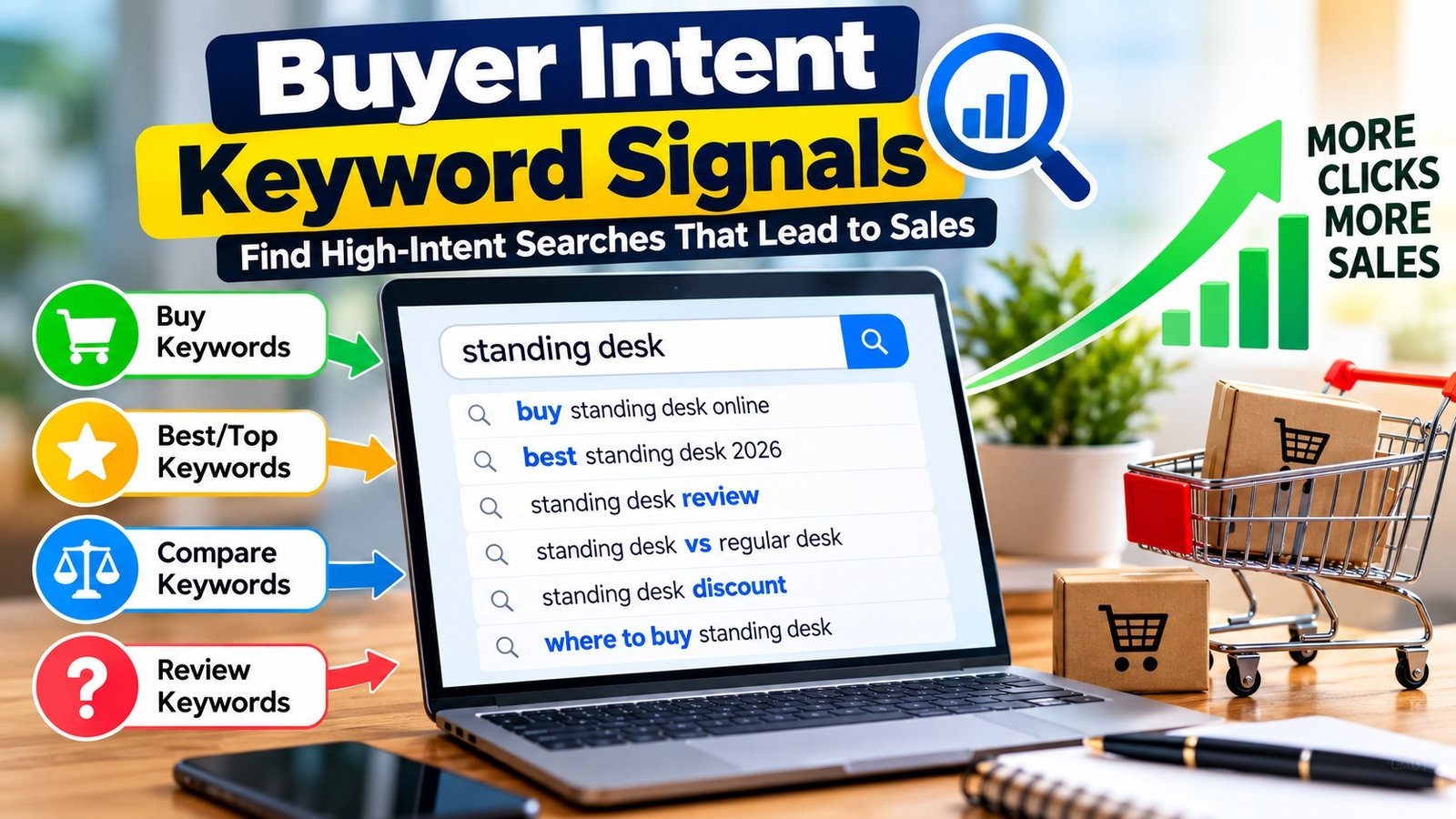
Common Buyer Intent Keyword Signals
- “Best” and “top” modifiers: queries like “best budget laptops” or “best website hosting” signal active product comparison.
- “Review” and “reviews”: readers looking for reviews, such as “website builder review,” usually have a specific product in mind and want validation before deciding.
- “Vs” and “versus” comparisons: comparing two named products, or phrases like “A or B,” indicates the reader is close to choosing one.
- “Alternative” and “alternatives to”: searchers looking for alternatives are often dissatisfied with a current option and ready to switch.
- “Buy,” “order,” and “purchase”: direct action words, as in “where to buy marketing software,” that show a transaction is planned.
- “Discount,” “coupon,” “deal,” and “sale”: price-focused terms that indicate a decision has largely been made.
- “Pricing” and “cost”: searchers checking price, such as “email marketing software pricing,” are usually evaluating whether to commit.
- Specific model names or numbers: a query naming an exact product model suggests the reader already knows what they want.
- “For [specific use case]”: phrases like “best camera for travel vlogging” or “AI tools for affiliate marketers” show a defined need and a ready-to-buy mindset.
How To Find Buyer Intent Keyword Signals
Finding buyer intent keywords involves more than scanning for a few obvious words like “buy” or “price.” A useful process considers the entire query and what the searcher is actually trying to accomplish.
- Start with your niche. Identify the core products, services, and categories relevant to your site, such as website hosting, SEO software, or online courses.
- Add buyer intent modifiers. Combine your main topic with commercial and transactional terms: best + product, product + review, product + comparison, product + pricing, product + alternatives, product + discount.
- Examine search results. If the top results are product comparisons, review pages, or pricing pages, the query carries commercial intent; if they’re mostly definitions and guides, it leans informational.
- Check paid advertising presence. Keywords with many advertisers bidding on them, or visible shopping ads, usually indicate strong commercial value.
- Study autocomplete and related searches. These frequently surface comparison and purchase modifiers that reveal how real shoppers phrase their queries.
- Group keywords by intent. Sort your list into informational, commercial investigation, transactional, and navigational buckets so each group can get the right type of content.
Example Keyword Classification
Consider a site promoting website-building tools. The same core topic produces very different intent depending on the modifier used:
- “What is a website builder” — informational
- “How to build a website” — informational
- “Best website builder” — commercial investigation
- “Website builder comparison” / “website builder review” — commercial investigation
- “Website builder pricing” — commercial, bordering transactional
- “Website builder discount” — transactional
How To Match Content To Buyer Intent Signals
- Write in-depth “best of” roundups for queries containing “best” or “top”
- Create honest single-product reviews for queries containing “review”
- Build side-by-side comparison articles for “vs” and “comparison” queries
- Publish alternatives lists for “alternative to” queries
- Offer clear pricing breakdowns for pricing and cost queries, and deal-focused pages for discount and coupon queries
- Reserve informational guides for building trust and internal links toward your commercial pages
Connecting Intent Stages With Internal Links
Buyer intent keyword signals work best as part of a connected structure rather than isolated articles. An informational piece like “What Is Website Hosting?” can link to a commercial-investigation page like “Best Website Hosting Platforms,” which can then link out to individual reviews or comparison pages. This lets visitors move naturally from learning about a subject to researching specific solutions, building a genuine content ecosystem instead of a scattered collection of unrelated posts.
Common Mistakes With Buyer Intent Keywords
- Ignoring lower-volume commercial keywords in favor of high-volume informational ones, or targeting only high-intent terms and skipping the informational content that introduces readers to your site earlier in their research
- Writing thin, promotional content that doesn’t genuinely help the reader decide
- Targeting pure transactional keywords dominated by major retailers without a realistic chance of ranking
- Failing to match the content format to what search results show readers actually want
- Using affiliate links that aren’t genuinely relevant to the page’s subject, simply because a program exists
- Neglecting to update reviews, comparisons, and pricing information as products and prices change
Frequently Asked Questions
Are high buyer intent keywords always better than informational ones?
Not always. Buyer intent keywords convert better, but informational content attracts early-stage readers, builds trust, and supports your commercial pages through internal links. A balanced strategy uses both.
Do buyer intent keywords have lower search volume?
Often, yes, since more specific, purchase-ready queries tend to be less common. However, their conversion rates usually outweigh the smaller volume, making them very valuable for affiliates.
What is the best buyer intent keyword type for affiliates?
Commercial investigation keywords, such as those with “best” and “review,” are often the strongest fit, since readers are actively comparing options and willing to follow recommendations.
How can I tell if a keyword has buyer intent without a tool?
Search the keyword and examine the results. Comparison posts, review pages, pricing pages, and shopping listings signal buyer intent, while definitions and how-to guides point to informational intent.
Can buyer intent keywords guarantee affiliate sales?
No. Buyer intent signals indicate likely commercial interest, not a guaranteed purchase or conversion. They’re a strong filter for where to focus content, not a promise of results.
Should I still write informational content?
Yes. Informational posts help you build authority, capture early-stage readers, and guide them toward your commercial content through internal links, all of which support higher overall conversions.
