
Content Strategy For Affiliate Marketing: The Complete Framework That Converts
Publishing randomly and hoping something ranks is not a content strategy, it’s a guessing game. A real content strategy decides what content to create, who it’s for, what questions it should answer, and how different pages connect with one another, so that traffic and commissions build on each other instead of competing for the same attention.
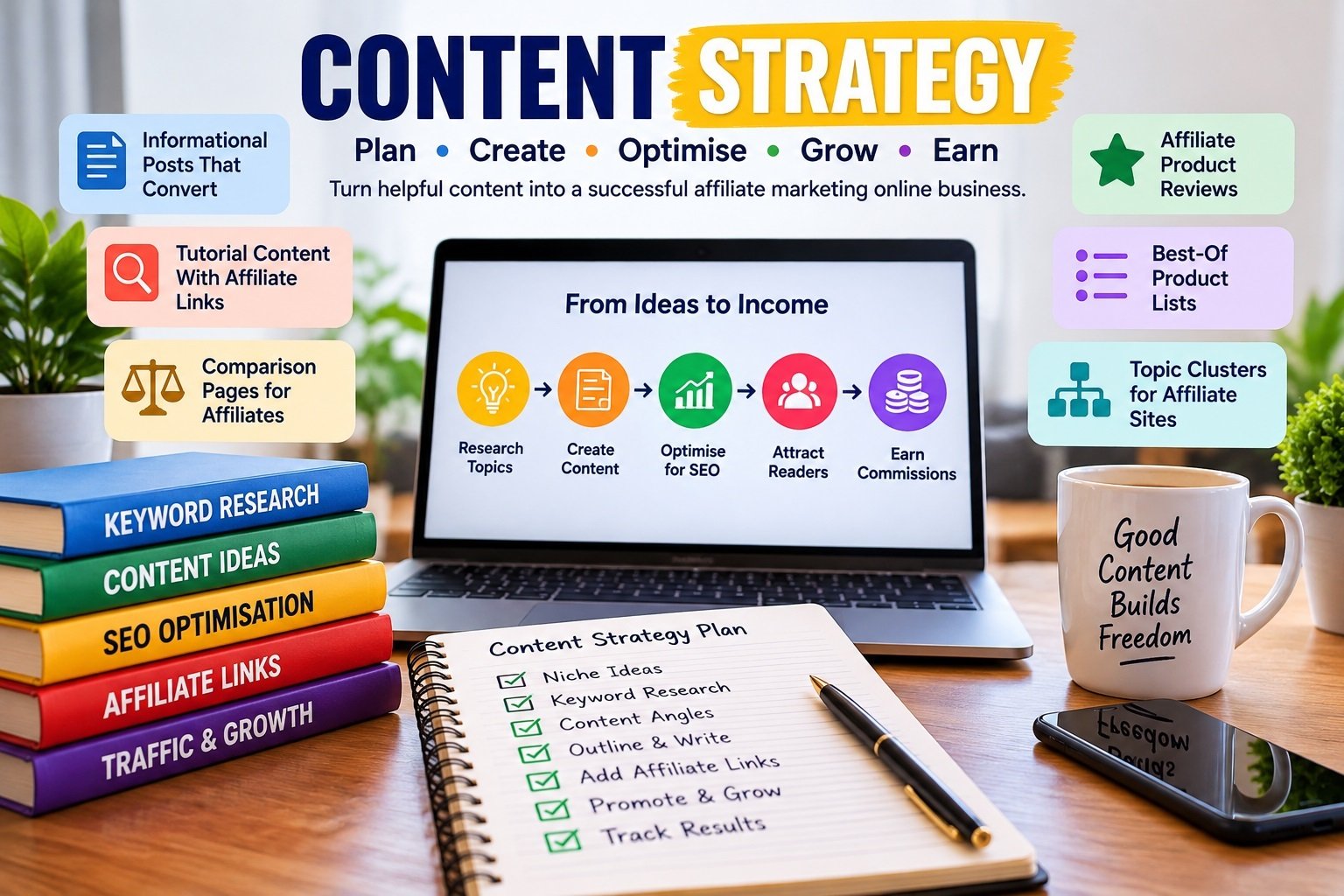
Instead of publishing unrelated articles, a deliberate strategy creates connected content that answers questions, solves problems, compares products, explains how to use solutions, and supports purchasing research at every stage of the buyer journey. This guide brings together the core content formats every affiliate site needs, how to structure them into topic clusters, and how to plan your first batch of articles so your site has direction from day one.
Why Content Strategy Determines Affiliate Success
Two sites in the same niche, publishing the same number of words, can perform completely differently depending on what they actually publish. A site full of thin, disconnected posts struggles to rank and rarely converts, while a site built around a deliberate mix of reviews, comparisons, and supporting guides builds both authority and buyer trust. Content strategy is the decision layer that sits above individual articles, determining which formats earn traffic, which formats earn commissions, and how the two reinforce each other.
Key Elements of An Affiliate Content Strategy
- Identify a specific niche and target audience
- Research the questions and problems your audience actually has
- Find relevant, validated products and affiliate programs
- Create a balanced mix of informational and commercial content
- Build related articles into topic clusters
- Add relevant internal links between articles
- Place affiliate links where they provide genuine value
- Review and update existing content regularly
The Core Content Types Every Affiliate Site Needs
Affiliate Product Reviews
Affiliate product reviews are the backbone of most successful affiliate sites, since they directly address a reader who is close to a purchase decision. A strong review covers real features, genuine pros and cons, and an honest verdict, rather than simply restating the manufacturer’s marketing copy. A useful structure to follow includes:
- A short product introduction and what it’s designed to do
- Key features and specifications
- Notable benefits and potential limitations
- Who the product may be suitable for
- Relevant alternatives
- Pricing or purchasing information where appropriate
- A clear affiliate disclosure alongside the purchasing link
If you haven’t personally tested a product, make that clear through your wording rather than implying hands-on experience you didn’t obtain. Readers can usually tell the difference, and search engines increasingly reward content that shows genuine, firsthand knowledge of a product.
Best-Of Product Lists
Best of products lists capture readers who are still comparing options rather than focused on one specific item, such as best laptops for students or best website hosting for small businesses. A well-built list explains the selection criteria, introduces each product with relevant context, highlights the differences between options, and links out to individual reviews for deeper detail. These pages often rank well for high-value “best” keywords precisely because they group products by use case or budget instead of listing them randomly.
Comparison Pages For Affiliates
Comparison pages for affiliates target readers who have narrowed their decision down to two or three specific products and want a direct answer about which one to choose. A useful comparison page covers product names and categories, key features and specifications, pricing, strengths and limitations based on available evidence, and who each option is best suited for, rather than repeating generic specifications the reader could find anywhere.
Tutorial Content With Affiliate Links
Tutorial content with affiliate links teaches the reader how to do something, and naturally recommends the tools or products needed along the way. A tutorial explaining how to set up a home recording studio, for example, could cover microphones, headphones, audio interfaces, and recording software, introducing affiliate links where a specific product is genuinely relevant to the step being explained. Because the instructions are useful on their own, this content tends to attract links and shares even from readers who don’t purchase anything immediately.
Informational Posts That Convert
Not every useful article needs to be a review. Informational posts that convert answer a reader’s underlying question first, then guide them naturally toward a product, buying guide, or comparison page once their understanding of the topic is established. An article about choosing a home office microphone, for instance, can explain microphone types and common mistakes before introducing relevant products where they genuinely help. These posts build trust early in the buyer journey and, through smart internal linking, pass that trust on to your commercial pages.
Building Topic Clusters For Affiliate Sites
Topic clusters for affiliate sites organize related content around one central subject, rather than treating every article as an isolated page. A cluster typically includes a broad pillar page, several supporting informational posts, product reviews, and comparison pages, all interlinked so search engines and readers can clearly see how the topic connects together.
- Choose a pillar topic broad enough to support many related articles, but specific enough to stay focused
- Map supporting subtopics, including common questions, product categories, and buyer concerns
- Assign a content type to each subtopic, such as a review, comparison, or tutorial, based on what the reader actually needs at that stage
- Link everything back to the pillar page and to closely related articles within the cluster
- Expand the cluster over time as new products, questions, and subtopics emerge
Example Topic Cluster
Imagine a site covering home office equipment, with “Home Office Equipment” as the pillar topic. A supporting cluster might include:
- Home Office Equipment Buying Guide (pillar page)
- Best Office Chairs
- Best Monitors for Home Offices
- How to Choose a Computer Monitor
- Office Chair Buying Guide
- Monitor Comparison Guide
- Best Desk Accessories
- How to Build a Home Office
Each supporting article links back to the pillar page and to other relevant pages within the cluster, creating a connected structure instead of a collection of unrelated posts.
Finding Content Angles For Boring Niches
Not every niche is exciting on the surface, but low-glamour categories like insurance, cleaning supplies, or office equipment can be some of the most profitable precisely because fewer creators want to cover them well. Almost every niche contains real problems, questions, comparisons, and purchasing decisions once you look past the product category itself. Finding genuine content angles for boring niches usually comes down to digging past the obvious and addressing the specific frustrations buyers actually have.
- Focus on a specific use case or type of buyer rather than the product category in general
- Address common mistakes or misconceptions that competitors’ content overlooks
- Turn dry specifications into practical, real-world comparisons readers can actually use
- Cover maintenance guides, cost comparisons, and product alternatives alongside standard reviews
- Answer the unglamorous but high-intent questions buyers ask right before purchasing
- Use original testing, photos, or data to stand out where most competitors publish generic content
Can You Create Affiliate Content Without Personal Use of A Product?
Many new affiliates assume they must own every product they write about, but affiliate content without personal use is common and can still be genuinely useful, as long as it’s built on solid research and honest wording. When you haven’t personally used a product, avoid implying that you have. Instead, research published specifications, compare features across competing products, read a wide range of verified customer feedback, and clearly distinguish verified facts from opinions.
- Study the manufacturer’s published specifications
- Compare features across competing products
- Explain the important buying factors a reader should weigh
- Identify the intended audience for each product
- Clearly separate verified facts from user opinions and third-party feedback
- Keep product information updated as specifications or prices change
Content built this way tends to work best for broader comparison or roundup formats, while in-depth single-product reviews generally benefit far more from first-hand experience.
Your First 20 Article Plan
A first 20 article plan gives a new affiliate site direction instead of a scattered mix of random posts, by covering different stages of the reader’s research and buying journey from the very first batch of content.
- Complete beginner’s guide to the niche
- What is the main product category, explained simply
- How to choose the right product for a specific need
- Common mistakes beginners make
- Important features and specifications to consider
- Best products for beginners
- Best products for a specific use case or budget
- Product A versus Product B
- A broader product category comparison guide
- A detailed buying guide
- Product alternatives
- A frequently asked questions page
- A how-to tutorial relevant to the niche
- A problem-solving tutorial
- A product maintenance guide
- A product selection checklist
- Two to three in-depth affiliate product reviews
- A best-of product list for your core category
- Product category trends or developments
- A comprehensive resource guide tying the cluster together
This mix gives new visitors an entry point at every stage of the buyer journey, while giving the site enough internal linking structure to start forming a genuine topic cluster from the very first batch of content.
How To Sequence Your Content For Maximum Impact
- Publish foundational informational content first to establish topical relevance early
- Follow with product reviews once you’ve confirmed the products fit your validated niche
- Add comparison and best-of pages once you have enough individual reviews to link between
- Layer in tutorials once your site has enough authority for instructional content to rank
- Revisit and update older content regularly as products, prices, and rankings change
How To Connect Content And Affiliate Offers
A successful affiliate website doesn’t need every article to contain an aggressive call to action. Instead, build a logical path between informational content and relevant commercial pages: an informational article can link to a detailed buying guide, the buying guide can link to comparison pages, and the comparison pages can then link to relevant product reviews or affiliate offers. This gives readers room to move from learning to evaluating products and, when they’re ready, on to the affiliate merchant.
Internal Linking Within Your Content Strategy
- Link beginner guides to more detailed articles
- Link informational articles to relevant buying guides
- Link buying guides to comparison pages
- Link product comparisons to individual product reviews
- Link supporting articles back to the relevant topic-cluster pillar page
Frequently Asked Questions
How often should I publish new content?
Consistency matters more than raw frequency. A steady schedule you can maintain long-term, combined with a deliberate mix of content types, tends to outperform sporadic bursts of publishing.
Do I need all five content types from day one?
Not immediately, but working toward a mix within your first 20 to 30 articles helps establish a functioning topic cluster rather than a collection of disconnected pages.
Can I create affiliate content without personally using every product?
Yes, as long as you accurately represent the source of your information and avoid implying personal experience or testing you didn’t actually carry out. Relying on credible sources and disclosing your research process helps maintain trust even without hands-on testing.
What’s the difference between a best-of list and a comparison page?
A best-of list typically covers several products across a broader category or set of use cases, while a comparison page focuses narrowly on two or three specific products a reader is actively deciding between.
How do I find content angles in a niche that feels boring?
Look past the product itself and focus on the specific frustrations, mistakes, maintenance issues, and decisions buyers face. Even unglamorous categories have real questions that most competing content answers poorly.
Should tutorial content contain affiliate links?
Yes, when the linked products or services are genuinely relevant to the step being explained and add real value, rather than being inserted purely for commission potential.
How many articles should I publish when starting an affiliate website?
There’s no universal number that guarantees success, but a structured first 20 article plan gives a practical starting framework that covers informational, commercial, and supporting content from the outset.
